


Why Your Tattoo Artist’s Minimum Exists
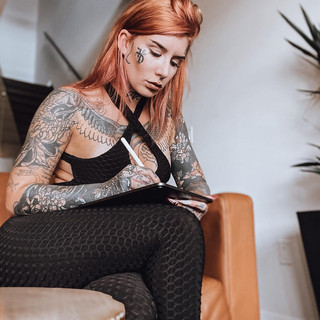
You want a small tattoo. A single line. A tiny symbol. Something that, in your estimation, will take about five minutes.
And then you find out there’s a minimum charge — often $100 to $200 depending on the studio — and it feels like you’re being overcharged for five minutes of work.
You’re not. Here’s why.
There Is No Such Thing as a Five-Minute Tattoo
The time the needle is moving is not the total time your appointment takes. Not even close. Before your artist touches your skin, a significant amount of work has already happened. After they put the needle down, there’s more. The tattoo itself is the middle of a process, not the whole thing.
Here’s what a ‘small’ appointment actually looks like from the studio’s side:
Before you sit down
Reviewing your booking, any reference images you sent, and your design request
Drawing or adapting the design
Setting up the station: assembling the machine, loading the needle cartridge, pouring ink caps, setting out barrier film, gloves, green soap, stencil paper, and all consumables
Sterilizing and preparing the work area to the standard required for an open-wound procedure
During your appointment
Consultation and design review with you in person — adjustments, sizing, placement discussion
Prepping your skin: cleaning, shaving if needed, applying stencil, repositioning until it’s right
The actual tattooing
Ongoing cleaning and wiping throughout
Wrapping and aftercare instructions
After you leave
Full breakdown of the station
Disposing of all single-use materials according to biohazard protocols
Cleaning and disinfecting all surfaces and reusable equipment
Autoclave sterilization of any reusable tools
A tattoo that takes ten minutes with the machine running can easily take sixty to ninety minutes of total time when the full appointment is factored in. The minimum exists because the full appointment has a floor, regardless of how small the design is.
The Cost of Doing This Properly
Running a legitimate tattoo studio is expensive. Not in a way that’s anyone’s fault — it’s just what proper practice costs. Here’s a partial list of what goes into every appointment:
Single-use supplies (per appointment)
Needle cartridges — sterile, single-use, disposed of after every client
Ink caps — small disposable cups, one per colour per session
Gloves — multiple pairs throughout a session
Barrier film — covers the machine, the clip cord, the bottle tops, the work surface
Stencil paper and transfer solution
Razors, green soap, witch hazel, paper towels
Aftercare wrap
Studio overhead
Rent — commercial space in a city, maintained to health code standards
Autoclave and sterilization equipment — not cheap to buy, not cheap to maintain, not optional
Liability insurance
Health and safety compliance
Equipment: machines, power supplies, foot pedals, lights, furniture
Ink inventory — professional-grade inks are not what you find on Amazon
The artist’s time and expertise
The person tattooing you spent years learning to do this. An apprenticeship. Thousands of hours of practice. Ongoing education about technique, safety, and industry standards. That knowledge and skill set is embedded in every appointment, including the small ones.
When you pay a minimum, you’re paying for the setup, the consumables, the studio’s operating costs, and the expertise of the person doing the work — not just the minutes the needle was running.
Why the Minimum Protects You Too
Studios that don’t charge a meaningful minimum are often cutting costs somewhere to make small appointments financially viable. That somewhere is usually supplies, sterilization standards, or artist compensation.
Proper single-use supplies, properly maintained equipment, and proper sterilization are not optional parts of tattooing. They’re what stands between a tattoo and an infection, a bloodborne pathogen transmission, or a cross-contamination event. The minimum is partly what funds those standards being maintained on every single appointment, regardless of size.
A tattoo studio that charges $40 for a small tattoo is not giving you a deal. They’re giving you a question mark.
What the Minimum Doesn’t Mean
The minimum is not a judgment on your tattoo idea. It’s not the studio saying your concept isn’t worth more. It’s not a shakedown.
It’s the floor cost of doing the appointment properly. Everything above the minimum reflects the complexity, size, time, and colour requirements of the specific work. Small, clean, simple tattoos done properly by a skilled artist at the minimum rate are an excellent value for what you’re actually receiving.

If you’ve got a small piece in mind and want to know what it would run at House of GRIM, reach out or book a consultation. We’ll give you a straight answer.


Comments